Best Chinese Enrichment Classes in Singapore: A Parent's Guide
Published 17 Oct 2026Updated 17 Oct 2026Little Buddy Team
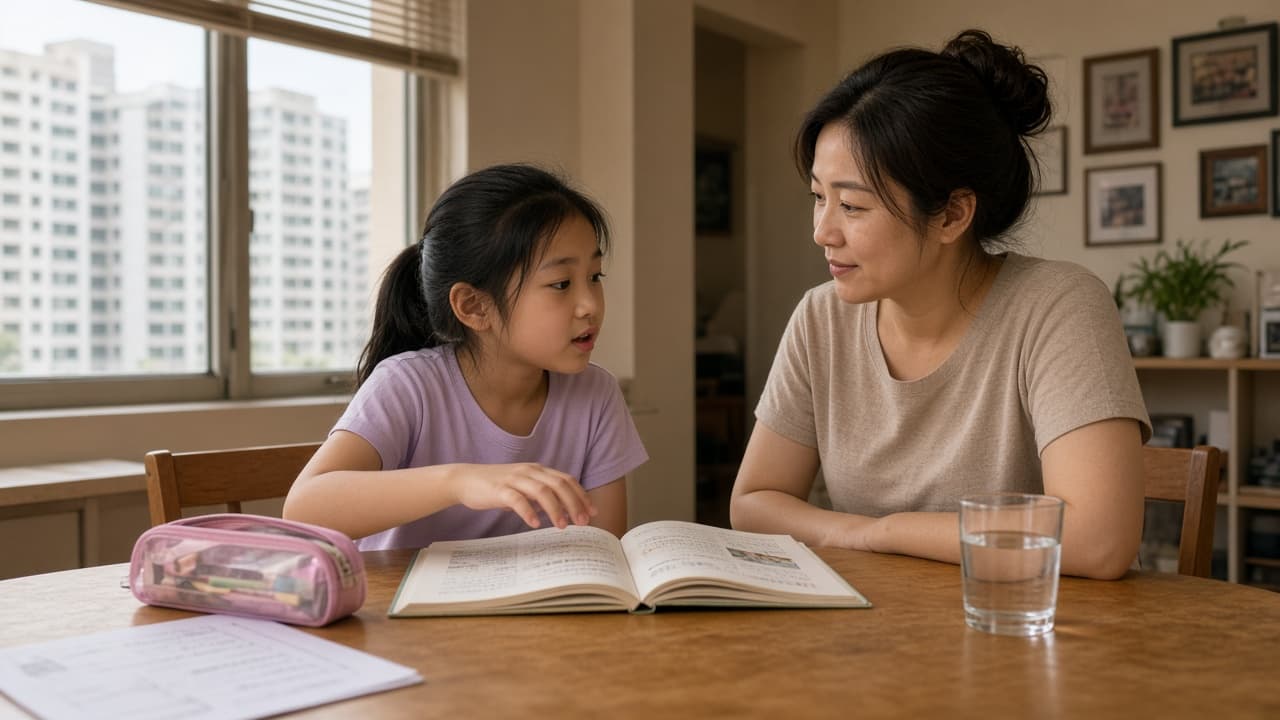
Why Chinese feels harder for today's children
A lot of us grew up speaking our mother tongue without scheduling it. Chinese happened at the dinner table, at a relative's house, and in the void deck. English mattered, of course. For some families it just was not the language the aunties used when they asked whether you had eaten.
Fast-forward to a very ordinary Tuesday. You ask a perfectly reasonable question in Mandarin. The reply comes back in fluent English, with full eye contact, as if you had asked in English all along. You try again. There is a pause, the universal 'let me think about it', and then a sentence that uses three of the words from last week's spelling list and none of the ones Grandma actually needs.
Some children understand everything and freeze when it is their turn to speak. Others can score on a written list and forget the same words when someone asks what they want for lunch. And if your own Chinese is rusty, homework becomes a surprise test with two candidates. Sometimes the person who needs a Chinese enrichment class is not the only one feeling the heat.
We want school results. We also want a child who can talk to family, enjoy a story, and not treat Mandarin as a subject that lives only inside a worksheet. The hard part is finding Chinese enrichment classes in Singapore that do both, without turning every Saturday into a language boot camp. That is why so many parents go looking for the best Chinese enrichment class in Singapore.
Here is the catch. The most expensive centre is not automatically the best one for your child. A lively, play-based room can be a relief for one child and too loose for another. A structured lesson can feel clear and fair, or it can feel like a second school day. Teacher, classmates, class size, pace and the child's own interests sit right next to the curriculum. The job is not to find the famous brand. It is to find a class this child can attend, understand and keep going to.
What should you look for in a Chinese enrichment class?
No single method wins. A good shortlist starts with the child in front of you, not with the centre that shows up first in a search.
- Teaching approach. Play, stories and drama help some children associate Mandarin with something other than correction. Structured practice helps when the gap is vocabulary, grammar, comprehension or composition. Plenty of centres mix the two. Ask which one actually takes up the hour.
- Teacher quality. Can this teacher explain a character, a sentence or a compo point in a way your child can repeat? Will they draw out a child who would rather answer in English? You cannot know from a website. A trial, or a proper conversation after one, tells you more.
- Class size. A smaller group usually means more turns to speak. A published ratio is a starting point, not a promise that every room stays at that number. Ask about the class your child would join.
- Language exposure. If most of the lesson is silent worksheet time, the speaking muscle does not get much work. That matters for a child who understands Chinese and will not use it.
- Curriculum. General language, support for the MOE syllabus, and PSLE preparation are related and not the same. Higher Chinese and Standard Chinese are not the same either. A class pitched only at Higher Chinese can leave a child on the standard stream feeling lost.
- Starting level. A child who barely speaks Mandarin needs a different first term from a child who reads but cannot write a composition. Placement should be a conversation, not a guess based on age.
- Homework. Find out what happens between lessons, and whether your family can do it without a nightly argument. A lighter load is not automatically better. An unrealistic one is a slow way to quit.
Best Chinese enrichment classes in Singapore: our shortlist
These eight are not a ranking, and they are not every centre on the island. They are options with a published programme a parent can actually inspect, covering preschoolers and primary pupils, gentler language-building and more academic practice, and at least one way to learn from home. Details below come from the centres' own pages, checked on 17 October 2026. Where parents have left public Google reviews, the notes say so. A centre's own testimonials are not treated as independent evidence.
1. Berries World of Learning
- Potentially best for: a preschooler or lower-primary child who switches off when Chinese feels like extra school, and a family that still wants vocabulary, reading and some written practice in the mix.
- Age groups: the site describes preschool programmes for ages 3 to 6 and primary programmes for ages 7 to 12. Nursery 1 (First Bite) is listed at 1 hour 30 minutes. Primary 1 is listed at 2 hours. A Primary 4 page lists Elite Chinese at 3 hours and High Potential or Chinese at 2 hours 30 minutes, so duration depends on the track.
- Teaching approach: Nursery 1 is described as a Mandarin-speaking room built around storytelling, multisensory activities, picture books and gradual vocabulary. Primary classes cover listening, speaking, reading and writing, including comprehension question types, pictorial writing moving towards a three-picture composition, show-and-tell, and mock oral and written checks. From Primary 3 the site lists Chinese, High Potential Chinese and Elite Chinese. Take-home word practice sits on an online portal called Berries Campus.
- Locations: the find-us page names six outlets: Bishan Street 11 (marked P1 to P6), Bishan Street 12 (marked N1 to K2), Bukit Timah, River Valley, Tanjong Pagar and Toa Payoh. On the same site, Berries also says it has grown to 19 outlets and, elsewhere, to over 20. The two figures do not match, so ask which branch runs your child's level.
- Fees: not published on the pages checked. Contact the centre.
- Official website: berriesworld.com.
What stands out is the path from stories and word play into school-style skills, with more than one primary track. Berries says it was founded in 1993 and that its lessons go beyond the MOE Chinese syllabus. That is the centre's description, not a measured result.
Things to consider: there is no published class size or fee. Public Google review excerpts from more than one branch, read on 17 October 2026, often say children look forward to class and describe teachers as warm. Other reviews, sometimes at the same brand, mention scheduling mix-ups, teacher changes that were not explained, and worksheets a parent still had to help with. Treat the outlet, not the logo, as the thing you are choosing. Primary lessons do include mock practice, but a family that wants heavy PSLE drilling should ask how exam-focused the specific track is.
2. Chengzhu Mandarin Centre
- Potentially best for: a young child, including a baby or toddler, who needs Mandarin to feel like play, stories and people. Also a primary child up to about Primary 4 who learns better through drama than through drills.
- Age groups: PlayNest for 6 to 18 months, PlayClub for 18 months to 3 years, Language Learners for N1 to K2, and a Hanyu Pinyin class for K2 to P1. School-year programmes are Language Skills and Creative Writing for P1 to P4, and Mandarin Expressions for P5 to P6. Language Skills is published as 2 hours, once a week.
- Teaching approach: Chengzhu uses EduDrama, which it describes as Julia Gabriel's drama-based method. Early programmes use music, movement, storytelling and imaginative play. Language Skills works on speaking, reading, writing and comprehension, including passage and picture work, and the centre says this supports the MOE primary Chinese curriculum.
- Locations: the contact page lists Rochester Mall, Greenwich V, The Woodleigh Mall and New Bahru. Older listings for Forum are not on that page.
- Fees: not published. The contact page says to email for the schedule and fees. The trial page says the trial fee is waived if you enrol, and up to 10% off term fees. That discount has an asterisk, so ask what it applies to.
- Official website: chengzhu.edu.sg.
What stands out is how early the classes start, and how clearly the method is about speaking and performing the language, not only recognising it. Parent-accompanied sessions for the youngest children are part of the published range.
Things to consider: class size is not published, and neither is the fee, so this can be a premium unknown until you ask. Language Skills stops at Primary 4. The trial page says Mandarin Expressions, for P5 and P6, prepares students for the PSLE Mandarin components. Ask what a weekly lesson actually covers before you treat it as full paper practice. Comments on the website are selected by the centre. They are useful as a picture of the intended mood, not as an independent review.
3. Tien Hsia Language School
- Potentially best for: a family that wants one Chinese centre from preschool through secondary, with levels kept apart, and a preschool class that is still playful but already points towards Primary 1.
- Age groups: Playgroup, N1, N2, K1 and K2, then Primary 1 to 6 and Secondary 1 to 4. Higher Chinese and Primary Chinese are separate programmes. Preschool teachers and primary or secondary teachers are different groups.
- Teaching approach: the preschool page describes stories, music, games and movement, in a Chinese-only room at N1. Published teacher-to-child ratios are 1:6 for N1, 1:8 for N2 and 1:10 for K1. K2's ratio is not stated there. Hanyu Pinyin starts in the second half of K1 and runs through K2, which also lists mock oral practice, spelling and structured tests. Primary and secondary pages say the curriculum follows the MOE syllabus. The centre says it was established in 1989 and is registered with MOE.
- Locations: the homepage lists Ang Mo Kio, Bukit Batok, Choa Chu Kang, Hougang, Jurong (FairPrice Hub, relocated from Jurong Point), Marine Parade, Orchard, SAFRA Punggol, Sembawang, Tampines and Woodlands.
- Fees: not on the official pages checked. Figures repeated on other websites were not used here. Contact the branch.
- Official website: tienhsia.com.
What stands out is the published preschool ratios and the refusal to mix levels. A three-year-old and a Primary 5 pupil are not being asked to share a pace. Neighbourhood branches also make this one of the easier brands to reach without a cross-island trip, though each outlet still has its own timetable.
Things to consider: the Primary 1 to Primary 6 pages call the classes small, but they do not publish a number, so ask. The centre publishes PSLE result highlights. That is its own marketing, not a comparison of how the average child does. Lesson intensity is also not something a homepage can settle. Ask how much of a K2 or P4 hour is speaking, and how much is seat work, before you decide whether the pace suits a reluctant learner.
4. Hua Language Centre
- Potentially best for: a preschooler who learns through songs and stories, and a primary pupil who needs vocabulary, oral, comprehension and composition, including recorded oral practice.
- Age groups: Playgroup for 18 months to 3 years, preschool for N1 to K2 (ages 3 to 6), primary for ages 7 to 12, and secondary for ages 13 to 16. Nursery lessons are listed at 1.5 hours and kindergarten lessons at 2 hours, with a Primary 1 bridging class. Primary classes run from P1 to P6 at 2 hours a week.
- Teaching approach: preschool lessons use songs, storytelling, language games, show-and-tell, poetry, strokes, Hanyu Pinyin, rhymes and riddles. The centre says this is aligned with the MOE Chinese curriculum. Primary lessons cover spelling, vocabulary, comprehension, creative writing, passage narration, video conversation and listening, plus mock exams. Oral mocks are recorded and shared with parents. A separate 2-hour oral, comprehension and composition class is for pupils who already have a basic vocabulary. The trial registration page also lists an Elite Chinese track. Ask which branches run it.
- Locations: four mall outlets on the locations page: United Square, Parkway Parade, Greenwich V and Causeway Point. Founded in 1992, according to the centre.
- Fees: not published on the programme pages checked. Contact the centre. A trial can be requested, including one focused on creative writing or oral.
- Official website: hua.com.sg.
What stands out is the spread, from a noisy preschool hour to upper-primary mock papers, without forcing every child into a three-hour block. Sharing oral recordings gives parents something concrete to listen to, which helps if you cannot tell from a school mark whether speaking is improving.
Things to consider: the homepage says classes are usually kept to 6 to 8 students. That is Hua's own figure, so ask about the class your child would join. Hua also says its primary curriculum is guided by a co-founder who was an MOE Chinese Language specialist inspector, and that teachers are native Mandarin speakers registered with MOE. Those are the centre's claims about its staff, not a score for every classroom. Parent comments on the site are chosen by Hua. Read recent reviews for the mall you would actually use.
5. HAO Chinese Tuition Centre
- Potentially best for: a family that wants the fee and the average class size in writing before they enquire, and a child whose school stream matches the class. Read the Higher Chinese limit before you shortlist it.
- Age groups: preschool Early Literacy Foundation for N1 to K2. Primary all-in-one classes for P1 to P6. Secondary classes for Sec 1 to 4. There is also a 12-lesson Hanyu Pinyin course, and a Read and Recognition course for primary pupils who are weak in Chinese.
- Teaching approach: preschool lessons put reading and writing at the centre, with vocabulary, speaking and Hanyu Pinyin. They last 1.5 hours. Primary lessons last 2 hours and cover comprehension, composition, oral and listening. P1 to P4 is Higher Chinese only. P5 and P6 offer Standard Chinese and Higher Chinese. The centre says classes average 6 to 8 students and that a free trial is available. The Read and Recognition course is aimed at pupils whose Paper 2 score is below 60%.
- Locations: six centres on the contact page: Balestier, Jurong East, Hong Kah North CC, Bukit Batok, Bedok Reservoir and Kovan. Bukit Batok and Hong Kah are different outlets.
- Fees: preschool is published at $601.68 a term including 9% GST ($552 before GST) for 12 lessons. Primary starts from $627.84 a term including GST ($576 before GST) for 12 lessons. Secondary starts from $981 including GST. Primary and secondary figures are starting prices. Confirm the level.
- Official website: haochinesetuition.com/programmes.
What stands out is how much HAO puts on the page: hours, term length, a GST-inclusive fee, an average class size and a free trial. The separate foundation course is also a direct answer for a primary child whose reading, not just exam technique, is the problem.
Things to consider: an average of 6 to 8 is not a cap. 'From' means the primary fee can be higher than $627.84. The larger limit is the stream. A P2 or P3 child on Standard Chinese may have no suitable HAO class, because those years are Higher Chinese only. Independent reviews were too thin to summarise a teaching theme, so ask the branch how a weaker speaker is supported in a Higher Chinese room.
6. Yuquan Language School
- Potentially best for: a child from nursery to Primary 6 who needs school-aligned Chinese in a smaller group, especially if a heavy weekly homework load would not survive contact with your household. One-to-one lessons are also listed.
- Age groups: the enrichment list runs from 2 years old through Primary 6, plus individual tutoring. The school also describes secondary, adult and holiday programmes.
- Teaching approach: preschool is described as joyful learning towards character recognition and independent reading. Primary lessons are described as literacy work aligned with the MOE syllabus, including exam skills for PSLE. The FAQ says classes are kept to about 6 to 8 students. Homework is generally not required unless a parent asks for it. Mid-term entry is allowed if there is space. The site says the school has taught Chinese since 1996.
- Locations: the contact page lists Parkway Centre in Marine Parade, Coronation Plaza in Bukit Timah, Beauty World Centre, and a childcare centre at 231 Mountbatten Road. Ask which programmes run at the childcare address.
- Fees: not published. Contact the school.
- Official website: yuquan.com.sg.
What stands out is the homework answer, which is unusually plain: learning is meant to happen in class, and home practice is optional. The adult classes are a practical side door if homework has turned into a two-person exam. That does not mean a parent has to enrol. It means the building is used to teaching beginners who are not seven.
Things to consider: the site shows named HSK scores for individual children. Those are examples the school chose to publish, not a typical outcome, and they are not PSLE results. Fees and the exact primary lesson plan are things you still have to ask for. Parent stories on the site are selected by Yuquan.
7. Wang Learning Centre
- Potentially best for: a primary or secondary student who can manage a structured lesson and needs comprehension, composition and oral work tied to school exams. A reluctant preschooler may want a gentler start elsewhere, even though N2 to K2 classes exist.
- Age groups: Nursery 2 to Secondary 4. For P1 to P4, the FAQ says the curriculum follows Higher Chinese and also includes elements of Standard Chinese. From P5 to Sec 4, Higher Chinese and Standard Chinese are separate classes.
- Teaching approach: three primary courses are published. The combined course is 3 hours and covers reading, comprehension, speaking, listening and essay writing. A 2-hour course focuses on Paper 2 comprehension and vocabulary. Another 2-hour course focuses on speaking, listening, essay writing and idioms. Each of those course pages lists a class size of 12. The FAQ says classes are typically around 10 to 12, depending on the room. Comprehension and composition are meant to be done in class. At home, pupils review oral notes, practise spelling and do corrections. Some multiple-choice work may be assigned if the week is heavy.
- Locations: the location page lists 14 branches, including Ang Mo Kio, Bukit Timah, Clementi, Dairy Farm, Hougang, Jurong East, Marine Parade, Novena, Punggol, Seletar, Serangoon, Tampines, Woodleigh and Yishun. The FAQ still says 12 locations. Use the location page, then confirm the branch.
- Fees: lesson fees are not on the pages checked. The terms page lists a $50 registration fee, a $100 deposit and $10 a term for materials, all including GST. The deposit is refundable if notice is given at least four weeks before the last lesson of the term. Course fees are non-refundable, and withdrawal is at the end of a term. The centre says it may revise fees.
- Official website: wang.edu.sg.
What stands out is how specific the academic menu is. A family can choose a full 3-hour lesson or a 2-hour paper, instead of buying a vague 'Chinese enrichment' hour. Make-up lessons are also spelled out: the same week, Tuesday to Sunday, if a slot exists. There is no one-to-one replacement, and no refund if a slot cannot be found. The terms page and the location page both say every branch is closed on Monday. Marine Parade is also closed on Tuesday.
Things to consider: public Google review excerpts from more than one branch, read on 17 October 2026, praise the composition practice and the materials, and also describe the 3-hour lessons as long and tightly packed. Teacher and admin comments differ by outlet. Individual PSLE scores in those reviews are not a promise. A child who is already tired after school may do better in a 2-hour paper than in the combined class. Ask which one is on offer at the branch, and whether the P1 to P4 pace assumes Higher Chinese strength.
8. LingoAce
- Potentially best for: a busy week, a child who needs the teacher to match their pace, or a family that cannot add another mall trip. Weaker fit if the child cannot stay with a screen, or if nobody can supervise a younger learner.
- Age groups: the Singapore page lists Chinese lessons for ages 3 to 12, and primary support for P1 to P6. Lessons are private classes of 25 or 55 minutes. The same page also advertises small-group enrichment and in-person classes.
- Teaching approach: one-to-one lessons are paced to the child. Small groups are described as discussion with other learners. Teachers are described as certified and experienced in teaching Chinese as a second language, with primary tutors experienced in syllabus support. A free trial follows a short intro call. This is the centre's account of its own lessons.
- Locations: weekly lessons are online, so home is the usual classroom. A June 2026 holiday-camp page also listed in-person camps at i12 Katong, LinQ @ Beauty World and 111 Somerset, from $458. That was a holiday product. Ask what in-person classes still run.
- Fees: the global pricing page metadata says classes start from US$14.2 a lesson. That is not a Singapore package price. Ask for the package total, lesson length, expiry rules and refund terms. The holiday-camp price is not the weekly price.
- Official website: lingoace.com/sg.
What stands out is convenience. A 25-minute lesson can sit on a weekday evening without a carpark queue. A private teacher can slow down for a weak speaker in a way a group of twelve cannot. Comments on LingoAce's own site also describe hybrid weeks, with an online lesson and a weekend class in person. Those are selected stories, so treat hybrid as something to ask about, not as a standard timetable.
Things to consider: the kitchen is still the kitchen. A younger child often needs an adult nearby, and a long day of school screens plus a Chinese screen is a real trade-off. Our screen time guide is about family habits rather than tuition, but the same question applies: can this child learn through a laptop without the lesson becoming another tab? Confirm that the teacher is covering the Singapore syllabus you care about, not a general overseas Chinese course.
Quick comparison
Read this across, not as a winner's table. Google ratings are left out on purpose. Review counts, branches and one family's year with a teacher are too different to rank, and a high rating does not show which child will speak more Mandarin in six months.
Programme details checked on 17 October 2026 against each centre's website. Lesson fees appear only where that centre publishes them.
- Potentially best for
- Playful lessons that still build school skills
- Age group
- About 3 to 12
- Teaching approach
- Stories and multisensory play, then tiered primary classes
- Format
- In person. Six outlets named. The site also says 19 and over 20
- Fees
- Contact centre
- Potentially best for
- Early confidence through stories and drama
- Age group
- 6 months to 12 years
- Teaching approach
- EduDrama. Language Skills is the P1 to P4 academic strand
- Format
- In person, four outlets
- Fees
- Contact centre
- Potentially best for
- A structured path from preschool to secondary
- Age group
- Playgroup to Sec 4
- Teaching approach
- Play at nursery, MOE-aligned later. Levels not mixed
- Format
- In person, 11 branches listed
- Fees
- Contact centre
- Potentially best for
- Preschool energy, then oral and writing practice
- Age group
- 18 months to 16
- Teaching approach
- Songs and stories, then mocks and composition
- Format
- In person, four malls
- Fees
- Contact centre
- Potentially best for
- Published fees and a smaller average class
- Age group
- N1 to Sec 4
- Teaching approach
- Literacy first, then an all-in-one school programme. P1 to P4 is Higher Chinese only
- Format
- In person, six centres
- Fees
- Preschool $601.68 a term. Primary from $627.84
- Potentially best for
- Smaller classes and light homework
- Age group
- About 2 to 12, plus older learners
- Teaching approach
- Foundations, then MOE-aligned primary work
- Format
- In person. One-to-one also listed
- Fees
- Contact centre
- Potentially best for
- Exam skills in a set lesson length
- Age group
- N2 to Sec 4
- Teaching approach
- Comprehension, composition and oral. 2-hour or 3-hour primary courses
- Format
- In person. Location page lists 14 branches
- Fees
- Contact centre for lessons. $50 registration, $100 deposit, $10 materials
- Potentially best for
- Home learning and a private pace
- Age group
- About 3 to 12
- Teaching approach
- Live online lessons, with some in-person options advertised
- Format
- Online. In-person camps have been advertised
- Fees
- From US$14.2 on the global page. Confirm the package
| Centre | Potentially best for | Age group | Teaching approach | Format | Fees |
|---|---|---|---|---|---|
| Berries | Playful lessons that still build school skills | About 3 to 12 | Stories and multisensory play, then tiered primary classes | In person. Six outlets named. The site also says 19 and over 20 | Contact centre |
| Chengzhu | Early confidence through stories and drama | 6 months to 12 years | EduDrama. Language Skills is the P1 to P4 academic strand | In person, four outlets | Contact centre |
| Tien Hsia | A structured path from preschool to secondary | Playgroup to Sec 4 | Play at nursery, MOE-aligned later. Levels not mixed | In person, 11 branches listed | Contact centre |
| Hua | Preschool energy, then oral and writing practice | 18 months to 16 | Songs and stories, then mocks and composition | In person, four malls | Contact centre |
| HAO | Published fees and a smaller average class | N1 to Sec 4 | Literacy first, then an all-in-one school programme. P1 to P4 is Higher Chinese only | In person, six centres | Preschool $601.68 a term. Primary from $627.84 |
| Yuquan | Smaller classes and light homework | About 2 to 12, plus older learners | Foundations, then MOE-aligned primary work | In person. One-to-one also listed | Contact centre |
| Wang | Exam skills in a set lesson length | N2 to Sec 4 | Comprehension, composition and oral. 2-hour or 3-hour primary courses | In person. Location page lists 14 branches | Contact centre for lessons. $50 registration, $100 deposit, $10 materials |
| LingoAce | Home learning and a private pace | About 3 to 12 | Live online lessons, with some in-person options advertised | Online. In-person camps have been advertised | From US$14.2 on the global page. Confirm the package |
Is a more expensive Chinese enrichment class better?
Not by itself. A higher fee can pay for a longer lesson, a smaller group, a city-centre room, printed books, a portal, or simply a brand that spends more on rent. None of those is the same thing as a teacher your child can learn from.
A less expensive class with a patient teacher and a pace the child can follow may do more than a premium room where they feel lost. The reverse is also true. A cheaper programme is poor value if it is the wrong level, if you then pay for a second class to fill the gaps, or if your child spends the hour waiting to go home.
Compare the whole bill. Registration, deposit, materials, holiday workshops, make-up lessons and the number of hours in a term change the real cost. HAO is the clearest example in this shortlist because the term price is on the website, GST included, for a stated number of lessons. Wang publishes the extras and not the lesson fee. Everyone else on this list expects you to ask. When you do, ask what is included and what is added later.
Classroom decor, a busy Instagram account and a relative's recommendation are weak evidence. So is a long waiting list. Popular can mean the class suits many children. It can also mean the marketing worked. If you are hoping to pay with the Child Development Account, check the Approved Institution list first. Not every enrichment centre is on it. The CDA guide explains what that account can and cannot pay.
Play-based learning versus exam-focused Chinese tuition
Play-based Chinese enrichment for preschoolers in Singapore usually means the child is speaking, moving, listening to a story or singing, and the language is attached to something they wanted to do anyway. Chengzhu's early programmes and the nursery end of Berries, Tien Hsia and Hua sit in this family. The hope is a child who does not flinch when Chinese starts.
Exam-focused Chinese tuition spends the hour on the skills a school paper actually marks: vocabulary, cloze, comprehension, oral prompts, listening and composition. Wang's primary courses are built this way. Hua's upper-primary mocks and HAO's all-in-one primary programme are in the same neighbourhood, with different packaging.
The messy truth is that many centres claim both. Berries moves from stories into mock orals. Tien Hsia's K2 already includes spelling and test formats. Chengzhu's Language Skills uses drama and still works on comprehension and writing. 'Fun' on a homepage does not tell you which half of the lesson is a worksheet.
Match the mix to the child. A preschooler who answers every Chinese question in English needs turns to speak and a reason to enjoy it. A Primary 5 pupil who understands stories and cannot finish a composition needs a different hour, closer to Chinese tuition for PSLE than to another round of songs. Age is a clue, not a rule. A Primary 2 child with almost no spoken Mandarin can still need the gentler starting point.
Other practical considerations Singapore parents should not overlook
Distance and convenience
The best Chinese tuition centre on paper is a bad plan if it sits on the other side of the island from school, CCA and dinner. A two-hour class quietly becomes half a Saturday once you add the walk to the car, the carpark, the waiting, and the food court meal you promised as compensation. A branch near home, school or something you were doing anyway is easier to keep for a year. Tien Hsia, Wang and HAO publish more neighbourhood outlets than Chengzhu or Hua. LingoAce removes the trip, and replaces it with whatever is happening in your living room.
Class timings
Check the real slot, not the brochure. Wang's terms and location pages say every branch is closed on Monday, and Marine Parade is also closed on Tuesday. On HAO's contact page, Balestier is open on Monday afternoon and closed on Tuesday. The other five HAO centres are closed on Monday and Tuesday, then open Wednesday to Friday afternoons and weekends. A timing that collides with swimming or with the only evening you can eat together will lose, however good the curriculum looks.
The child's energy
A child who has already done a full school day may not have a three-hour composition class left in them. That is not a character flaw. Wang's own review themes include parents saying the long lesson is useful and also that it is relentless. A 25-minute LingoAce class or a 90-minute nursery lesson is a different physical ask. Look at the child on a Thursday, not the child you hope will appear after the first week.
Classmates and the room
Peers change whether a child risks a Mandarin sentence. A room of confident speakers can pull a quieter child along, or it can convince them to stay silent. Ask whether the class is grouped by level, and what happens if your child is clearly ahead or behind after a few weeks. Tien Hsia says it does not mix levels. HAO's lower primary classes are Higher Chinese only. Those are different answers to the same problem.
Teacher-child fit
For a child who is anxious about speaking, patience is not a soft extra. It is the lesson. Public reviews for Berries often mention warmth, and also show that a teacher or a front desk can change the experience at a single branch. You are allowed to ask who teaches the class, how often teachers change, and what you should do if your child is afraid of this one.
Trial classes and make-up lessons
HAO and LingoAce publish a free trial. Hua invites parents to arrange one, including a writing or oral trial. Chengzhu's trial page describes a paid trial that is waived on enrolment. The others should be asked directly: is there a trial, is it the real class or a sample, and is it charged? For absence, Wang's rule is specific and strict. Do not assume another centre works the same way. Illness, camps and CCAs will happen.
Homework and family time
Yuquan says homework is generally optional. Wang expects oral revision, spelling and corrections at home, with the longer writing done in class. Berries points families to a portal and in-house books. Somewhere in between is the amount your evenings can hold. Be honest. A programme that needs a daily Chinese conversation is a gift in a home that already has one, and a fight in a home that does not.
Long-term affordability
Primary Chinese does not get cheaper just because you have paid for nursery. Fees often rise with the level, and P5 to P6 is when many families add holiday classes. Look at the year, then imagine the same bill when there is a second child, or when CCA season eats the make-up slots. Joining because the parent chat says everyone has a place is an expensive way to be unsure.
Questions to ask before signing up
Take these to the trial, or to the phone call. A centre that cannot answer them is telling you something too.
- How much of each lesson involves speaking Mandarin?
- How do teachers support a child with a weak Chinese foundation?
- What is the usual class size for my child's level, at this branch?
- How much homework is expected each week, and what happens if it is not done?
- How do you tell parents about progress and about what is still shaky?
- Is this class mainly for language development, school support or exam preparation? Is it Higher Chinese, Standard Chinese, or both?
- Can my child attend a trial, and is the trial charged?
- What is the full fee, including registration, deposit, materials and GST?
- What is the make-up lesson policy, and how much notice does a withdrawal need?
- After three to six months, what should we be able to see if the class is helping?
How to tell whether the class is working
School grades are a lagging indicator, especially for younger children. A term of songs will not always show up as a neat mark. Look at language use first.
For a younger child, progress can look small and still be real: answering in Mandarin instead of switching to English, following a classroom instruction, using a new word at home, or asking for the Chinese story again. Enjoying the class counts. A child who cries every week is giving you data.
For a primary pupil, you can also watch reading comprehension, whether vocabulary survives past the spelling test, oral confidence, sentence writing and composition. School assessments matter when the class was chosen to support them. They are not the only measure, and one bad paper does not prove the centre has failed.
Review it on purpose, around the three-month and six-month marks. Talk to the teacher about what you see at home. Moving to a more expensive or more intensive class is one option. It is not the automatic fix for a mismatch of pace, personality or stream.
So, which Chinese enrichment class should you choose?
There is no single best Chinese enrichment class in Singapore for every child. Use the child's starting point, then let the logistics vote.
- A young child who dislikes Chinese: look at programmes that build confidence and a pleasant association first. Chengzhu's early years, Berries' nursery classes, and the preschool hours at Tien Hsia and Hua are the closest matches in this list.
- A child who needs stronger foundations: look for patient teaching, a suitable pace and systematic vocabulary, not just a livelier worksheet. HAO's literacy and Read and Recognition courses are explicit about this. Yuquan's smaller classes and lighter homework may suit a family that cannot add more night work.
- A primary pupil who needs schoolwork or PSLE preparation: choose a programme that names the skill. Wang's comprehension and composition courses, Hua's mocks and oral recordings, HAO's primary programme and Tien Hsia's separate Higher and Primary Chinese streams are built for that job. Check the stream before you pay.
- A busy family: LingoAce, or the nearest suitable branch, if the format fits the child. Convenience only helps when someone is actually learning.
Distance, timing, the teacher, the classmates, the full fee and the shape of your week all sit in the decision. The best programme is the one your child can attend consistently, learn from and still tolerate in March, not just in the first enthusiastic week.
The aim is not to turn every family dinner into a Chinese oral examination. It is to help your child use the language a little more confidently, one lesson and one ordinary conversation at a time. Grandma's question about lunch is a perfectly respectable test.
How this shortlist was put together
This is a parent's desk guide, not a controlled comparison of results. The shortlist was compiled from published programme pages, locations and fees, plus public review themes where the same point turned up at more than one branch. Centres were left out when the public information was too thin to describe the class honestly. Another website's ranking was not treated as proof.
Little Buddy has not visited these centres, sat in on lessons or tested children. We do not have a star rating, and a Google score would not be one. Quotes and result lists on a centre's own site are the centre's marketing.
Sources
The factual claims in each profile follow these pages. Review comments are summarised, not quoted as testimonials.
- Berries programmes and branch list: ages, Nursery 1 at 1 hour 30 minutes, the Primary 4 durations, tracks and the six named outlets. The site says both 19 outlets and over 20.
- Chengzhu and its contact and Language Skills pages: ages, EduDrama, the 2-hour P1 to P4 class, and the four outlets. The trial offer is on the centre's trial page.
- Tien Hsia, its preschool page and its Primary 1 to 6 pages: preschool ratios, Chinese-only N1, level range, separate Higher and Primary Chinese, the 11 branches, and small primary classes with no published number.
- Hua, its preschool and primary pages, and locations: Playgroup through secondary, the usual class size of 6 to 8, lesson lengths, oral recordings and the four malls.
- HAO programmes and HAO centres: fees, hours, average class size, the Higher Chinese limit, the foundation course and the six outlets.
- Yuquan and its contact page: class size, homework, ages and outlets.
- Wang primary courses, FAQ, terms and locations: course lengths, class size, homework, fees extras, make-up rules and branches.
- LingoAce Singapore and its pricing page: ages, 25- and 55-minute private lessons, free trial, and metadata pricing of US$14.2 a lesson.
- Public Google review listings for Berries and Wang branches, read on 17 October 2026, for the recurring themes named above. Star ratings were not used as a ranking.