Financial Assistance for Parents in Singapore
Published 19 Sept 2026Updated 19 Sept 2026Little Buddy Team

When a childcare invoice, a paediatric bill, and a supermarket receipt land in the same week, it can feel as if everyone else has a system and you are improvising. You are not. Raising a child in Singapore is expensive. Many families use a mix of government cash, co-savings, preschool subsidies, and — when a month simply does not stretch — ComCare or community help.
This page is a map of financial assistance for parents in Singapore as of September 2026. It names the main schemes, what they are for, and where to start. Amounts and rules change. Treat the figures here as a briefing, then confirm them on LifeSG, SupportGoWhere, or the agency page linked below. Little Buddy is a parent-built directory, not a government office or a financial adviser.
Start here: LifeSG and SupportGoWhere
If you remember only two websites, remember these. You do not have to qualify for every scheme on this page. Most families use a few. If you are already exhausted, start with the scheme that matches the bill in front of you.
- LifeSG is the front door for birth registration, Baby Bonus enrolment, Child Development Account steps, and many family payments.
- SupportGoWhere is the place to search assistance by need — cash, preschool, student care, household bills — and to begin a ComCare application.
Cash and savings for your child
The biggest cash layer for Singapore Citizen children is still the Baby Bonus Scheme in 2026. From 1 April 2027 it is replaced by the SG Child Support Package announced at the 2026 National Day Rally. If you are already on Baby Bonus, existing payouts continue and you are meant to be moved across automatically.
Baby Bonus Scheme (still paying in 2026)
The scheme has two parts: a cash gift you can spend, and a Child Development Account (CDA) you cannot withdraw as cash. For Singapore Citizen children born on or after 14 February 2023 whose parents are lawfully married, the Baby Bonus Cash Gift is $11,000 for a first or second child and $13,000 for a third or subsequent child. It is paid every six months until the child is 6.5, into the Child Savings Account that opens with the CDA.
The CDA is the co-savings side. A First Step Grant is deposited when the account is opened — $5,000 for a first or second child, and $10,000 for a third or subsequent child born on or after 18 February 2025. Parents’ later savings are matched dollar-for-dollar up to a cap that still depends on birth order. CDA money can be used at approved places for preschool fees, medical bills, MediShield Life or MediSave-approved integrated plan premiums, assistive devices, and selected childminding under the Early Childhood Development Agency (ECDA) pilot.

Enrol during birth registration on LifeSG, or apply there if the birth is already registered. Then finish opening the CDA and Child Savings Account with DBS/POSB, OCBC, or UOB. Made For Families keeps the wider list of child-raising support.
SG Child Support Package (from 1 April 2027)
The new package aims to give every Singapore Citizen child the same cash support, regardless of birth order — up to $62,000 through age 17, or around $70,000 if you include the $5,000 MediSave Grant for Newborns and Edusave contributions. CPF’s parent briefing is a clear official summary.
- $10,000 Baby Gift in cash, in two tranches within 12 months of birth.
- $32,000 Child Credits: $2,000 a year from the year the child turns 1 to the year they turn 16.
- $5,000 CDA First Step Grant, plus up to $5,000 government co-matching, with the CDA lasting until the end of the year the child turns 16.
- $10,000 top-up to the Post-Secondary Education Account in the year the child turns 17.
Existing Singapore Citizen children turning 1 to 17 in 2026 are included, with payments based on their age. Children still receiving Baby Bonus Cash Gift continue until 31 March 2027; if the cash already received is less than $10,000, a top-up is due by 30 April 2027. The first $2,000 Child Credits for children turning 1 to 16 in 2026 are also due by 30 April 2027.
The extra Large Families CDA First Step Grant and Large Family LifeSG Credits stop under this switch. Officials have said large families will still get extra help in areas such as healthcare, transport, and housing; details were still being worked out after the Rally. Confirm the live transition rules on LifeSG before you plan around a figure.
MediSave Grant for Newborns
When you register a Singapore Citizen birth, a MediSave account is created and $5,000 is credited. It can go towards MediShield Life premiums, recommended vaccinations, hospitalisation, and approved outpatient care. It sits beside Baby Bonus, not inside it. For how hospital bills and insurance layers fit together, see our baby insurance guide.
Preschool, kindergarten, and student care
Infant care and childcare fees are often the largest monthly line after housing. Singapore Citizen children in licensed centres can get a Basic Subsidy — typically up to $600 a month for full-day infant care and $300 for full-day childcare if the main applicant is working, or $150 if not. Families with a working main applicant and a monthly household income of $12,000 or below (or per capita income of $3,000 or below in larger households) can add an Additional Subsidy. From January 2027 that Additional Subsidy and Kindergarten Fee Assistance Scheme (KiFAS) income ceiling rises to $15,000 a month, or $3,400 per capita.
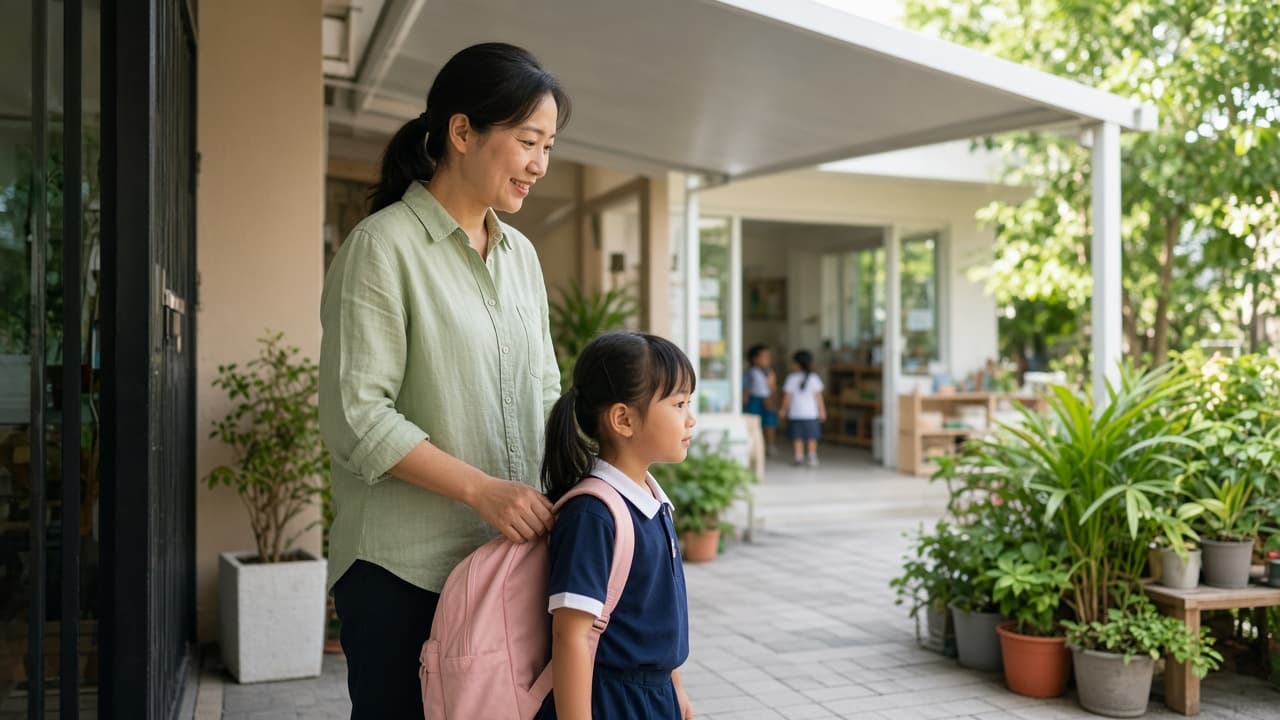
At government-supported centres, full-day childcare fee caps were lowered to $610 for Anchor Operators and $650 for Partner Operators from 1 January 2026. Later National Day Rally measures will push government-supported full-day childcare and infant care fees toward $150 and $300 a month respectively, rolled out from 2028 toward 2030.
KiFAS helps Singapore Citizen children in Anchor Operator or MOE kindergartens when household income is within the same $12,000 / $3,000 per capita band, rising in 2027. Subsidies go to the centre; you pay the net fee, subject to a minimum co-payment. Student Care Fee Assistance income thresholds rise from $4,500 to $6,500 a month from January 2027.
Families on ComCare or HDB public rental can get maximum preschool subsidies under Special Approval until the next assessment. If a parent is not working, ECDA still has Special Approval routes for job search, study, pregnancy, medical unfitness, and caregiving — ask the centre rather than assuming you only get the basic amount. Rates, income bands and a worked fee example are in our childcare subsidy guide. Use ECDA’s infant and childcare subsidy overview and KiFAS overview/overview).
When the month does not stretch
ComCare is for households that cannot cover food, transport, rent, or utilities — not a prize for filling in a form perfectly. You apply through SupportGoWhere or a Social Service Office. SSOs look at the whole picture. A per-capita income figure around $800 a month is a guideline, not a hard cutoff. Short-to-medium-term help is often three to six months at first; long-term assistance is for people who cannot work. Immediate relief exists when the need is urgent.
You must be a Singapore Citizen, or a Permanent Resident in a household with at least one Citizen family member. If you are not sure you “qualify,” apply anyway and tell them what is happening. They can also connect you to food, jobs, and family support. Read MSF’s ComCare page before you go, but do not wait for a perfect folder of documents if the cupboard is already thin.
ComLink+ is extra coaching and cash for families already on that programme. Budget 2026 enhanced Progress Packages, including $500 every quarter for families working with Family Coaches, plus higher payouts tied to preschool attendance and stable work. This is not a walk-in scheme; your coach or SSO will know if you are on it.
Household credits and vouchers in 2026
Budget 2026 also put money into ordinary household costs. These are not a substitute for Baby Bonus or ComCare. They are the layer that shows up as grocery credit or a LifeSG balance.
- $500 Child LifeSG Credits for each Singaporean child aged 12 and below, claimed through the LifeSG app.
- $500 CDC Vouchers for every Singaporean household, for use at participating supermarkets, hawker centres, and heartland merchants, with the 2026 round due in January 2027. Claim them on the official CDC Vouchers site when the window opens.
- U-Save rebates for eligible HDB households, applied automatically to utility bills.
Community doors, if government schemes are not enough
Self-help groups and religious assistance sit beside, not instead of, government help. Each has its own income tests and forms. A school, family service centre, or SSO can often point you to the right counter. For children’s charities that sit beside those schemes — protection, illness, disability, food — see children’s charities in Singapore.
- CDAC for Chinese Singaporean families.
- Yayasan MENDAKI for Malay/Muslim families.
- SINDA for Indian Singaporean families.
- Eurasian Association for Eurasian families.
- MUIS zakat assistance for eligible Muslim households.
A short path through the paperwork
- Register the birth on LifeSG and enrol in Baby Bonus in the same flow when you can.
- Open the CDA and Child Savings Account with your chosen bank so the First Step Grant and cash gifts have somewhere to land.
- Ask your infant care, childcare, or kindergarten to run the subsidy or KiFAS application. Do not wait for a perfect folder of payslips if you are already enrolled.
- If food, rent, or bills are the problem this month, start on SupportGoWhere or walk into an SSO. Take identity documents and whatever income proof you have.
- When CDC vouchers or Child LifeSG Credits are released, claim them even if the amount feels small. Small amounts pay for milk and bus fares.
- For a low-cost day out while you wait on a form, browse free kids’ activities on Little Buddy.
If you are holding a hospital bill rather than a preschool invoice, the baby insurance guide explains how MediShield Life and hospitalisation cover differ. None of this replaces talking to the agency that pays you, or to a licensed adviser if you are buying a policy.
This page is general information for Singapore parents, updated in September 2026. Confirm live amounts, dates, and eligibility on the official sites before you apply.