The Singapore Vaccination Schedule for Babies and Toddlers: What Is Due, and What You Do Not Have to Pay For
Published 22 Oct 2026Updated 22 Oct 2026Little Buddy Team
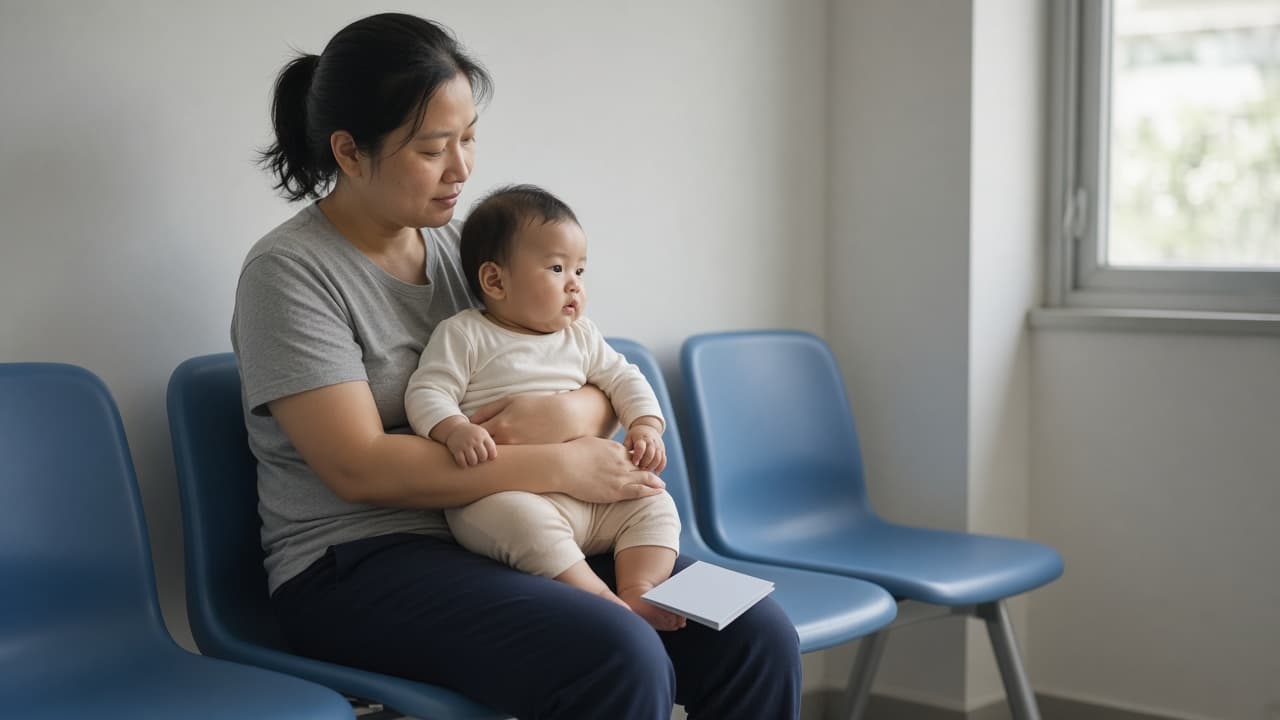
If you have sat in a polyclinic with a queue number in one hand and the Health Booklet slipping out of the diaper bag, you already know the visit. The baby is fine until the alcohol swab. Then the room learns which jab your child objects to most. Some visits are two of them, back to back, and you are the one doing the maths on the way home.
The search is usually some version of Singapore vaccination schedule baby, typed in that queue. This is the child immunisation schedule Singapore uses for those years: what is due from birth to about age six, which of it is subsidised, and which extra jabs are a private conversation. It follows the National Childhood Immunisation Schedule. It is not a reason to add a vaccine because someone in the parent chat had a scare last week.
What is due from birth to 18 months?
The Health Booklet is the card you are supposed to bring. The table is that same stretch, from the hospital bassinet to the toddler who already knows the clinic door. One needle can cover five or six diseases. The names look worse than the visit.
National Childhood Immunisation Schedule, birth to age six. School-age doses, including HPV, are left out on purpose. Source: HealthHub Child Health Booklet.
Birth, in hospital
- What is given
- BCG dose 1, and hepatitis B dose 1 within 24 hours
- Subsidy status
- Given before discharge. This is not the CHAS GP visit.
2 months
- What is given
- 6-in-1 dose 1: diphtheria, tetanus, pertussis, polio, Hib, and hepatitis B dose 2
- Subsidy status
- Citizen child at a CHAS GP: $0 vaccine fee cap. Polyclinic: up to a full subsidy for eligible citizens and PRs.
4 months
- What is given
- 5-in-1 dose 2 (diphtheria, tetanus, pertussis, polio, Hib) and pneumococcal (PCV13) dose 1
- Subsidy status
- Same subsidy as the 2-month visit.
6 months
- What is given
- 6-in-1 dose 3, which includes hepatitis B dose 3, and pneumococcal (PCV13) dose 2. Yearly flu can start.
- Subsidy status
- Same subsidy. Flu from 6 months until under 5 is on the schedule for every child.
12 months
- What is given
- Pneumococcal (PCV13) booster, MMR dose 1, and varicella dose 1, given as separate jabs
- Subsidy status
- Same subsidy as the 2-month visit.
15 months
- What is given
- MMRV: MMR dose 2 and varicella dose 2 in one jab
- Subsidy status
- Same subsidy as the 2-month visit.
18 months
- What is given
- 5-in-1 booster
- Subsidy status
- Same subsidy as the 2-month visit.
Every year from 6 months until the 5th birthday
- What is given
- Influenza. The first season, from 6 months to 8 years, is two doses four weeks apart, then one dose a season.
- Subsidy status
- On the schedule for every child in this age band, at the same child subsidy.
| Age | What is given | Subsidy status |
|---|---|---|
| Birth, in hospital | BCG dose 1, and hepatitis B dose 1 within 24 hours | Given before discharge. This is not the CHAS GP visit. |
| 2 months | 6-in-1 dose 1: diphtheria, tetanus, pertussis, polio, Hib, and hepatitis B dose 2 | Citizen child at a CHAS GP: $0 vaccine fee cap. Polyclinic: up to a full subsidy for eligible citizens and PRs. |
| 4 months | 5-in-1 dose 2 (diphtheria, tetanus, pertussis, polio, Hib) and pneumococcal (PCV13) dose 1 | Same subsidy as the 2-month visit. |
| 6 months | 6-in-1 dose 3, which includes hepatitis B dose 3, and pneumococcal (PCV13) dose 2. Yearly flu can start. | Same subsidy. Flu from 6 months until under 5 is on the schedule for every child. |
| 12 months | Pneumococcal (PCV13) booster, MMR dose 1, and varicella dose 1, given as separate jabs | Same subsidy as the 2-month visit. |
| 15 months | MMRV: MMR dose 2 and varicella dose 2 in one jab | Same subsidy as the 2-month visit. |
| 18 months | 5-in-1 booster | Same subsidy as the 2-month visit. |
| Every year from 6 months until the 5th birthday | Influenza. The first season, from 6 months to 8 years, is two doses four weeks apart, then one dose a season. | On the schedule for every child in this age band, at the same child subsidy. |
Pneumococcal, the PCV13 dose, does not start at two months on the current schedule. The first dose sits with the four-month visit, the second at six months, and the booster at twelve. Older charts still say otherwise, which is how a parent ends up arguing with a blog in the waiting room.
The twelve-month visit is the loud one, because measles and chickenpox are separate needles. The combined MMRV jab waits until fifteen months. Using it for the first dose has a higher chance of a fever fit in young children. Your baby can still scream. That part is not in the circular.
- At birth: hepatitis B vaccine and hepatitis B immunoglobulin, within 12 hours.
- At 1 month: monovalent hepatitis B, dose 2.
- At 2 months: 5-in-1 dose 1, not the 6-in-1.
- At 6 months: hepatitis B dose 3 can be given as part of the 6-in-1.
Polyclinic, CHAS GP, or the paediatrician you already like
The vaccine and the consult are not always the same bill. Ask before you sit down: if the jab itself is subsidised, is there still a fee to be seen? A queue number does not answer that.
- Singapore Citizen child at a CHAS GP: $0 fee cap for NCIS vaccines on the Subsidised Vaccine List, and $0 for the seven developmental screenings. Ask whether a consult fee sits on top.
- Permanent Resident child: subsidies at polyclinics, not the CHAS $0 child cap. The polyclinic line is up to a full subsidy for eligible citizens and PRs. Ask what the bill is.
- Private paediatrician who is not a CHAS clinic: the clinic's own fee. The $0 cap does not apply.
- BCG and the birth dose of hepatitis B are given in hospital, before the polyclinic queue.
A polyclinic is booked on HealthHub. Bring the booklet. Eligible permanent residents are subsidised there, and they are not on the citizen cap at a CHAS GP. A private paediatrician who is not on CHAS gives the same national schedule and charges the clinic's price. Browse paediatric clinics if you do not have one yet, and read GP vs paediatrician if you are still choosing the door.
MediSave can be used for NCIS vaccinations given in an outpatient clinic, under the current rules. Do not budget from a dollar cap in an old circular. The clinic submits the claim. Confirm the limit with them and with MOH.
Flu, COVID-19, and the vaccines that are not on the list
Flu is the one parents talk about as if it were a mall extra, because it comes back every year and the child already had a dose in June. It is on the national schedule for young children. COVID-19 is named on the schedule too, and it does not behave like the six-in-one. There is no birthday it falls on.
- Influenza: every year, or each season, for all children from 6 months until under 5 years (6 to 59 months). A first flu season from 6 months to 8 years is two doses, four weeks apart, then one dose a season. From 5 to 17, only with a specific medical condition.
- COVID-19 is on the NCIS for children with a medical reason, not as a dose for every healthy toddler. From 6 months to 4 years that is two doses, eight weeks apart, then another dose about a year later. A child with a weakened immune system is recommended three initial doses. Other children from 6 months can still receive it, and eligible citizens, permanent residents, long-term pass holders, and certain short-term pass holders are not charged.
- Not on that 15-disease list: hand, foot and mouth disease, rotavirus, hepatitis A, and meningococcal disease. A clinic may still offer them. There is no national price to quote.
- From 1 January 2027, HPV9 joins the schedule for females aged 9 to 26. That is a school-age vaccine, not a baby dose. The Health Booklet amendment announced for that date is this change.
Hand, foot and mouth is the outbreak parents actually meet, at the void deck and in the class chat. The vaccine for it is not a national due date. If the neighbour's child had a miserable week, that is a reason to ask your doctor. It is not a reason to sign a package in a corridor.
What if you miss a slot?
You will. A fever the night before, a parent on shift, a slot that disappeared while you were still looking for the birth certificate. Missing a dose does not mean you start the whole series again because a website said so. The clinic uses a catch-up. Tell them the date, bring the booklet, and let them place the next one.
You can see what is already recorded on the National Immunisation Registry with Singpass. The booklet and the registry should match. When they do not, the clinic visit is where that gets fixed, not the group chat.
Two vaccines are compulsory under the Infectious Diseases Act: measles and diphtheria. They sit inside MMR and the five-in-one or six-in-one, not as extra appointments. Everything else on the schedule is recommended national care. Recommended is not the same word as optional, and it is not the same word as whatever a mall clinic is selling this month.
Where to take them
Polyclinic child health visits are booked on HealthHub. A CHAS GP can do the same jabs if the clinic is on the scheme and has the vaccine in the fridge that week. Call. A fridge being out of pneumococcal is a Tuesday problem, and it is common enough that you should ask before you leave the house.
If you want a paediatrician, use the clinic directory and ask two questions: do you give the national childhood vaccines, and is there a consult fee if the jab itself is subsidised? The difference between a GP and a paediatrician is in GP vs paediatrician.
Sources
The ages, doses, and subsidy rules above follow these pages. They still need a person to open each one before this is published.
- CDA: Vaccinations — diseases on the NCIS, compulsory measles and diphtheria, and the COVID-19 subsidy.
- HealthHub: Child Health Booklet — schedule touchpoints, and the note that the booklet will be amended.
- HealthHub: Immunisation — what each childhood vaccine is for.
- MOH: Childhood vaccinations and developmental screening — who is subsidised, and where.
- CHAS: Screenings and vaccinations — the child fee cap at CHAS GP clinics.
- MOH Circular 180/2020 — 6-in-1, pneumococcal timing, MMRV as dose 2, and hepatitis B when the mother carries the virus.
- CDA: updated COVID-19 vaccines — who is recommended to receive a dose, and that eligible people are not charged.
- MOH: HPV9 added from 2027 — a school-age change, not a baby dose.
- National Immunisation Registry — the record, opened with Singpass.
Frequently asked questions
What if my child misses a scheduled vaccine?
Is the HFMD vaccine on the national schedule?
Do I need to pay at a GP versus a polyclinic?
Are measles and diphtheria vaccines compulsory?
How do I see which doses my child has already had?
Does a private paediatrician give these jabs for free?
Booking the next dose?
Find a clinic, then call and ask whether they give NCIS vaccines and whether a consult fee sits on top of a $0 jab.
Browse paediatric clinics